
Guide
Google's new AI report: what 20,700 AI impressions looked like for a Philippine directory
In the three months to early November 2026, links to NearMe Kids PH appeared about 20,700 times inside Google's AI Overviews and AI Mode. That's roughly 7% of all the times the site appeared in Google Search. Google's new Generative AI report in Search Console shows it, and it also shows something we didn't expect: while the site's total Google impressions fell, its AI impressions kept rising.
What is the Generative AI report in Search Console?
It counts how often links to your site were shown inside Google's AI answers: AI Overviews and AI Mode.
Google introduced the report on June 3, 2026, labelled Beta, and it's rolling out gradually. You'll find it in Search Console under Performance, then Generative AI. A separate view covers Discover.
Three things to know before reading the numbers:
- It shows impressions only. No clicks, no click-through rate and no search queries.
- It doesn't split AI Overviews from AI Mode. Both are counted together.
- Not every site has it. Google only shows it to sites with enough impressions in its AI features, so if it's missing from your Search Console, that's likely why.
These AI impressions are also part of your normal Performance totals. The new report pulls them out so you can see them on their own.
How often did Google's AI show NearMe Kids PH?
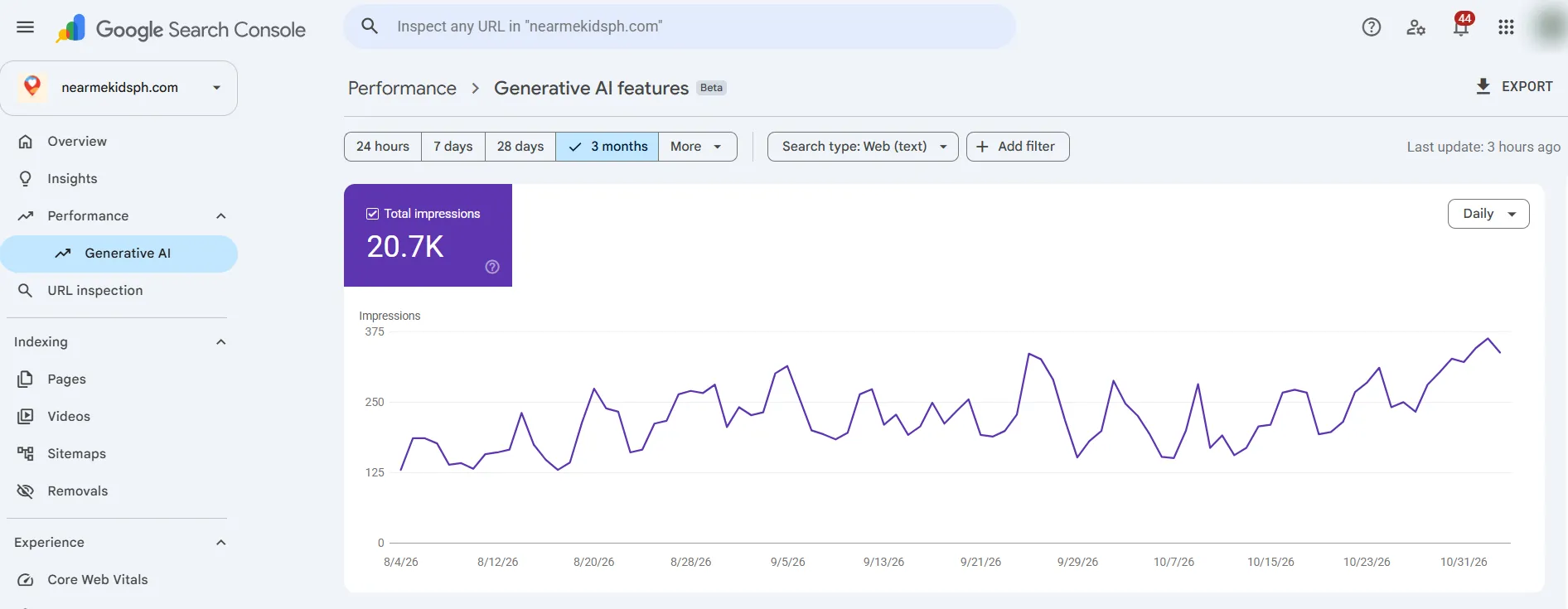
About 20,700 times in three months, roughly 7% of the site's 305,000 total Google impressions.
NearMe Kids PH is a parent-run directory of kid-friendly places in Metro Manila. These are its Search Console numbers for the three months to early November 2026, search type Web:
| Google Search overall | Inside Google's AI answers | |
|---|---|---|
| Impressions | 305,000 | 20,700 |
| Clicks | 5,210 | Not reported |
| Average position | 7.5 | Not reported |
Daily AI impressions started at around 125 to 175 in early August and reached about 350 by the end of October.
Did AI impressions grow while normal search shrank?
For this site, yes. Total Google impressions peaked in mid-September and fell by about half, while impressions inside AI answers kept rising.
Reading the two daily charts side by side:
- Total Google impressions climbed from about 2,300 a day in early August to a peak of about 5,600 around September 11, then settled at roughly 2,500 to 3,300 a day by late October.
- AI impressions rose from about 125 to 175 a day in early August to about 350 a day by the end of October, with no comparable drop.
So the AI share of the site's Google visibility roughly doubled, from about 6% of daily impressions in early August to about 13% by late October. These are approximate figures read from the charts.
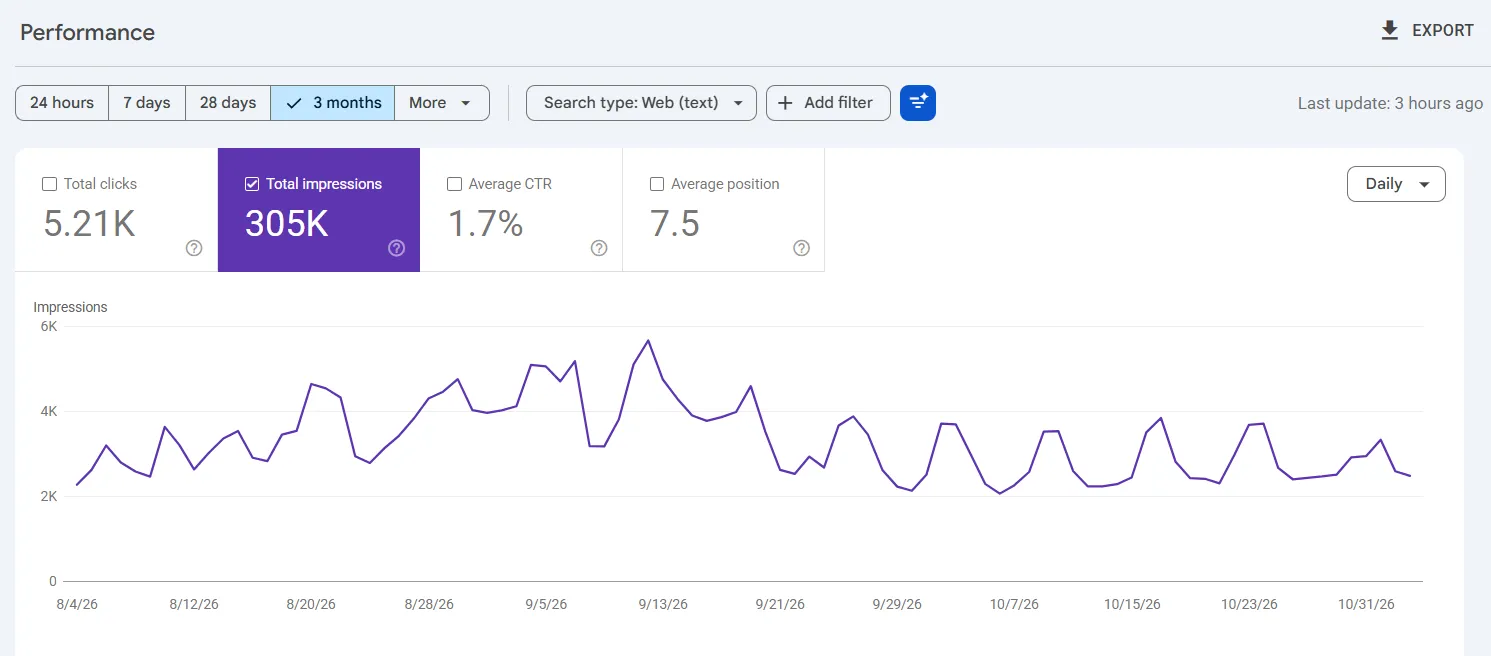
This is one site over three months, so it doesn't prove a trend. Seasonal searches, such as school holidays, could explain part of the September peak. But it's a clear sign that, for a local directory, AI answers are becoming a bigger share of how Google shows the site.
Which pages did Google's AI use most?
Individual venue pages and city pages, not the homepage. Google's AI showed links to 133 different pages on the site.
| Page | Type | AI impressions |
|---|---|---|
| Fantasy Worlds, SM City Fairview | Venue | 2,124 |
| What to do in BGC with kids | Blog post | 1,967 |
| Makati | City page | 1,403 |
| Homepage | Homepage | 1,220 |
| Fantasy World Makati | Venue | 1,169 |
| 10 best indoor places for rainy days | Blog post | 1,009 |
| Indoor playgrounds in Metro Manila | Guide | 1,001 |
| Quezon City | City page | 859 |
| BGC | City page | 816 |
| Funtopia Park | Venue | 645 |
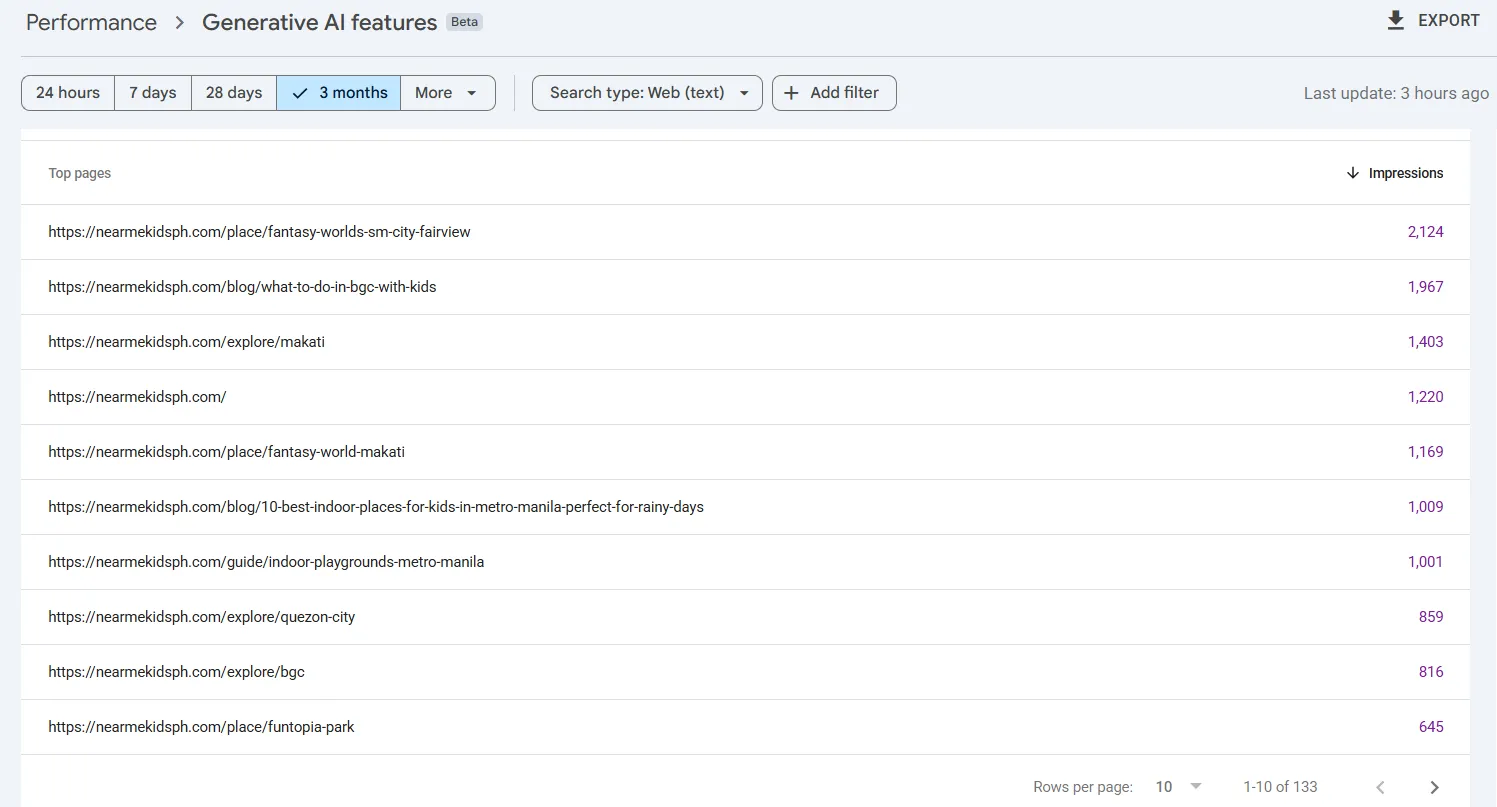
The mix matters. Three of the top 10 are pages about a single place, three are city pages, three are guides or blog posts, and the homepage is fourth. Google's AI reached deep into the site, to the pages that answer specific questions like where to take kids in Makati or what a particular playground is like.
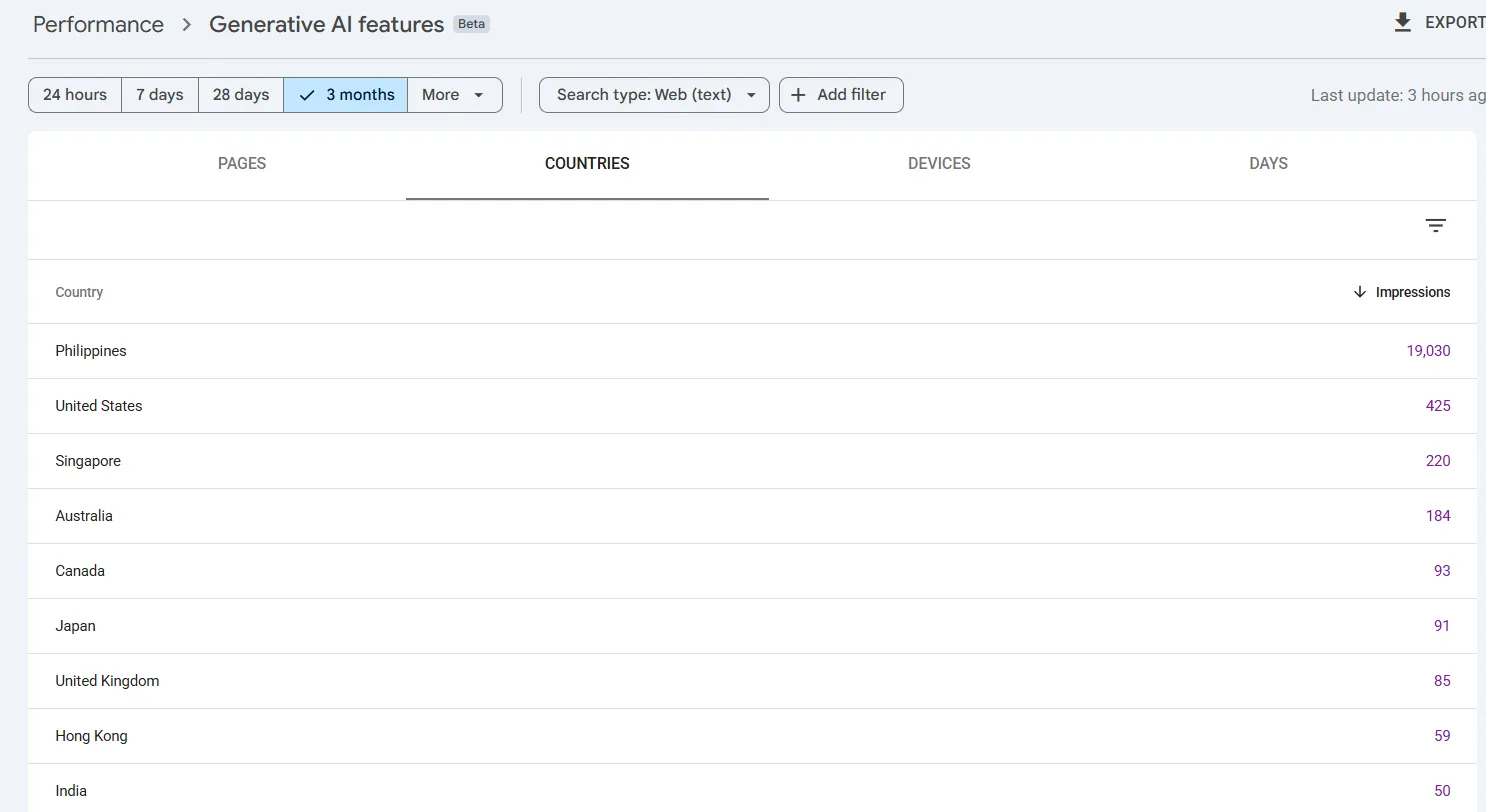
Where the impressions came from: 92% from the Philippines (19,030). The rest came mostly from the United States, Singapore, Australia and Canada, possibly Filipino families abroad.
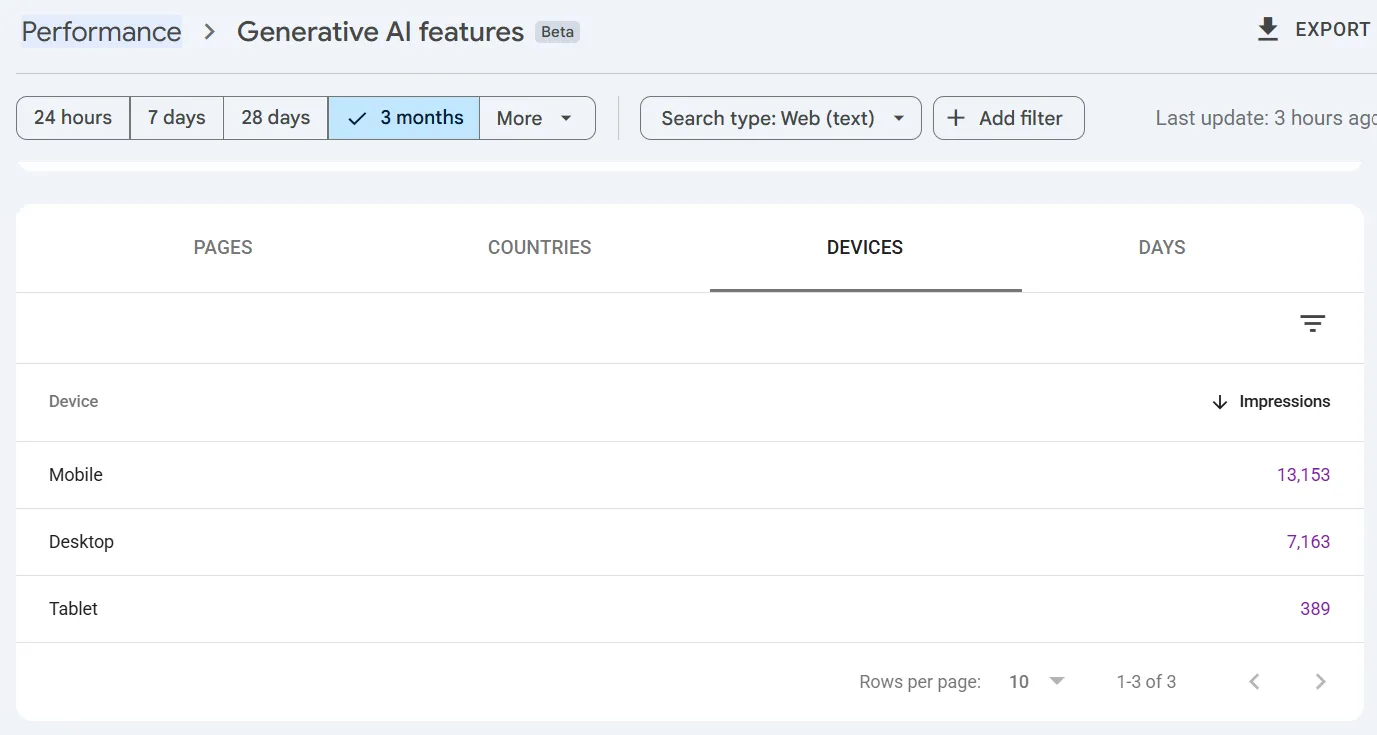
Which devices: 64% on mobile (13,153), 35% on desktop (7,163) and 2% on tablets (389).
How could Google's AI read a site built with JavaScript?
Because Google's crawler runs JavaScript. Most other AI crawlers don't.
NearMe Kids PH is a React app. Until November 4, 2026, the HTML it sent to crawlers held just 9 words, and everything else appeared only after JavaScript ran. Crawlers that don't run JavaScript, such as those behind ChatGPT, Claude and Perplexity, saw an almost empty page. We fixed that and documented it in our case study.
Google and Bing do run JavaScript, so their AI could read the full site before the fix. The numbers show it:
- Google's AI Overviews and AI Mode: about 20,700 impressions in three months, led by venue and city pages.
- Microsoft Copilot: 652 citations over a similar period, according to Bing Webmaster Tools, led by the homepage and a blog post about free places.
These two figures measure different things, impressions versus citations, so they can't be compared directly. But together they show that the engines able to read the site used it, and its deeper pages too.
All the numbers in this article come from before the fix. We'll compare the same reports at 30 and 90 days to see whether making the site readable to the other crawlers changes anything.
What can't the report tell you?
It tells you that you appeared, not whether anyone clicked or what they searched for.
- No clicks. Clicks from AI answers still happen, but this report doesn't show them. In Google Analytics they're counted as normal organic search traffic.
- No queries. You can see which pages appeared, but not which questions triggered them.
- No split between AI Overviews and AI Mode. You can't tell which of the two showed your site.
- It's a beta. Google may change what it counts or how it's displayed.
So treat it as a visibility trend over time, not a measure of results. It's most useful for comparing the same site month to month, and for seeing which pages Google's AI relies on.
How do I check this for my own site?
Open Search Console, go to Performance, then Generative AI, and record a baseline today.
- Set the date range to 3 months and note your total AI impressions.
- Open the regular Performance report with the same dates and note total impressions, so you can work out your AI share.
- Check the Pages tab and note which pages Google's AI uses most. Those are the pages worth keeping accurate and up to date.
- Check Bing Webmaster Tools' AI Performance report too, for Copilot citations.
- Repeat every month with the same settings, and compare.
If the Generative AI report doesn't appear, your site may not have enough AI impressions yet.
Google's report only covers Google, which can read JavaScript. To see whether the crawlers behind ChatGPT, Claude and Perplexity can read your pages, run a free audit at heyblanc.com. It shows what those crawlers actually receive.
Sources
- Introducing Search Generative AI performance reports in Search Console, Google Search Central, June 3, 2026
- The rise of the AI crawler, Vercel and MERJ, December 2024
- NearMe Kids PH data: Google Search Console and Bing Webmaster Tools, three months to early November 2026